


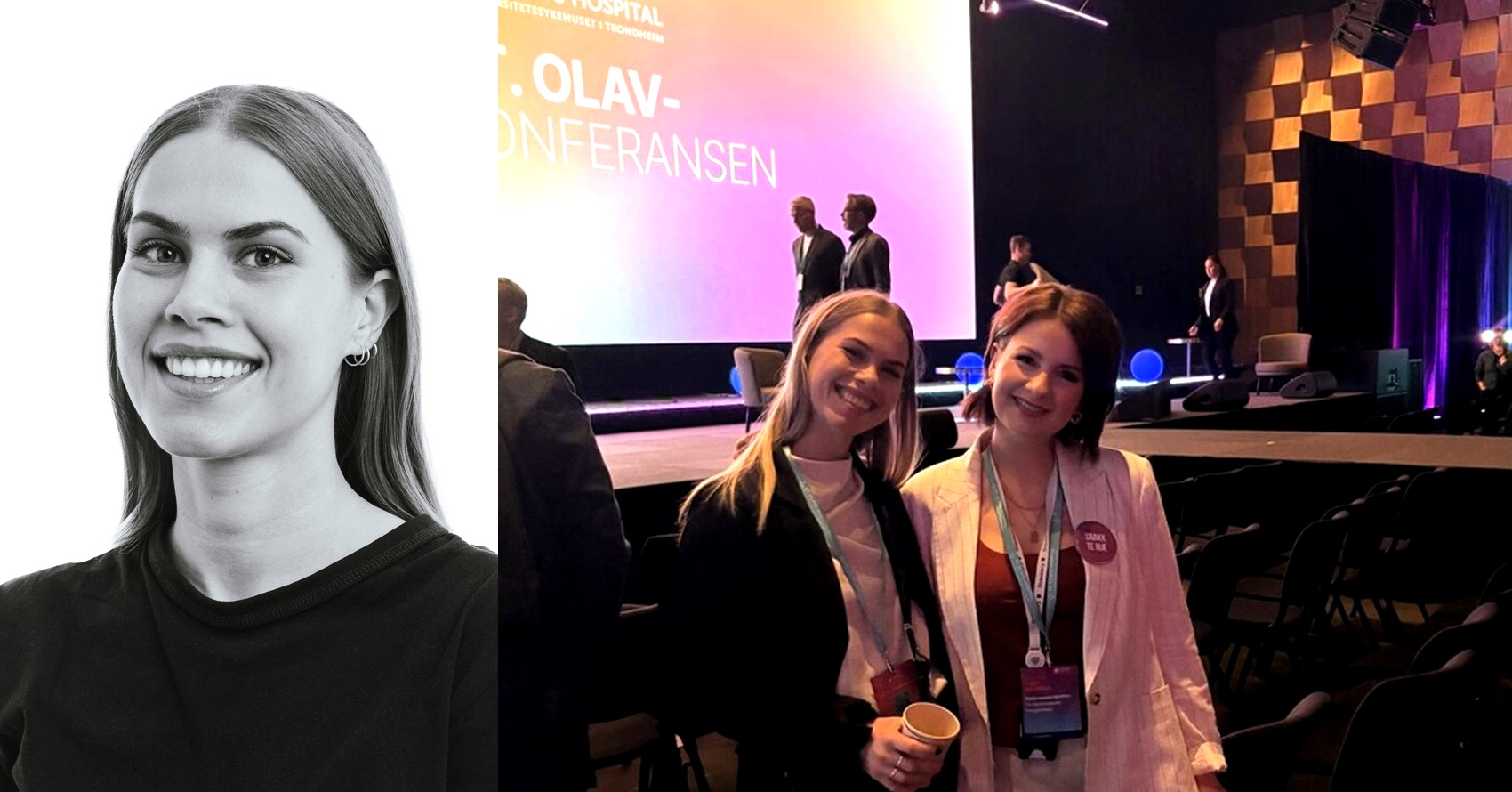
Less than a month after Hanna began her studies, ChatGPT arrived. The job market she had envisioned started to change rapidly. But it also led her to rethink how design skills can be applied in the workplace.
Hanna Skjetne Berg is 30 years old and lives in Trondheim. Her background is one that few designers can claim: several years working as a nurse in the cardiac intensive care unit at St. Olavs Hospital.
- I genuinely enjoyed working as a nurse. I loved both the profession itself, the human interactions, and the complexity of the healthcare system. At the same time, I’ve always had a creative side. I wasn’t sure whether it was possible to combine design with a healthcare background, or even how to go about it, but I decided to find out.
The answer was an online Graphic Design programme at Noroff. What she didn’t know when she applied was that the job market she planned to enter would look very different by the time she graduated.
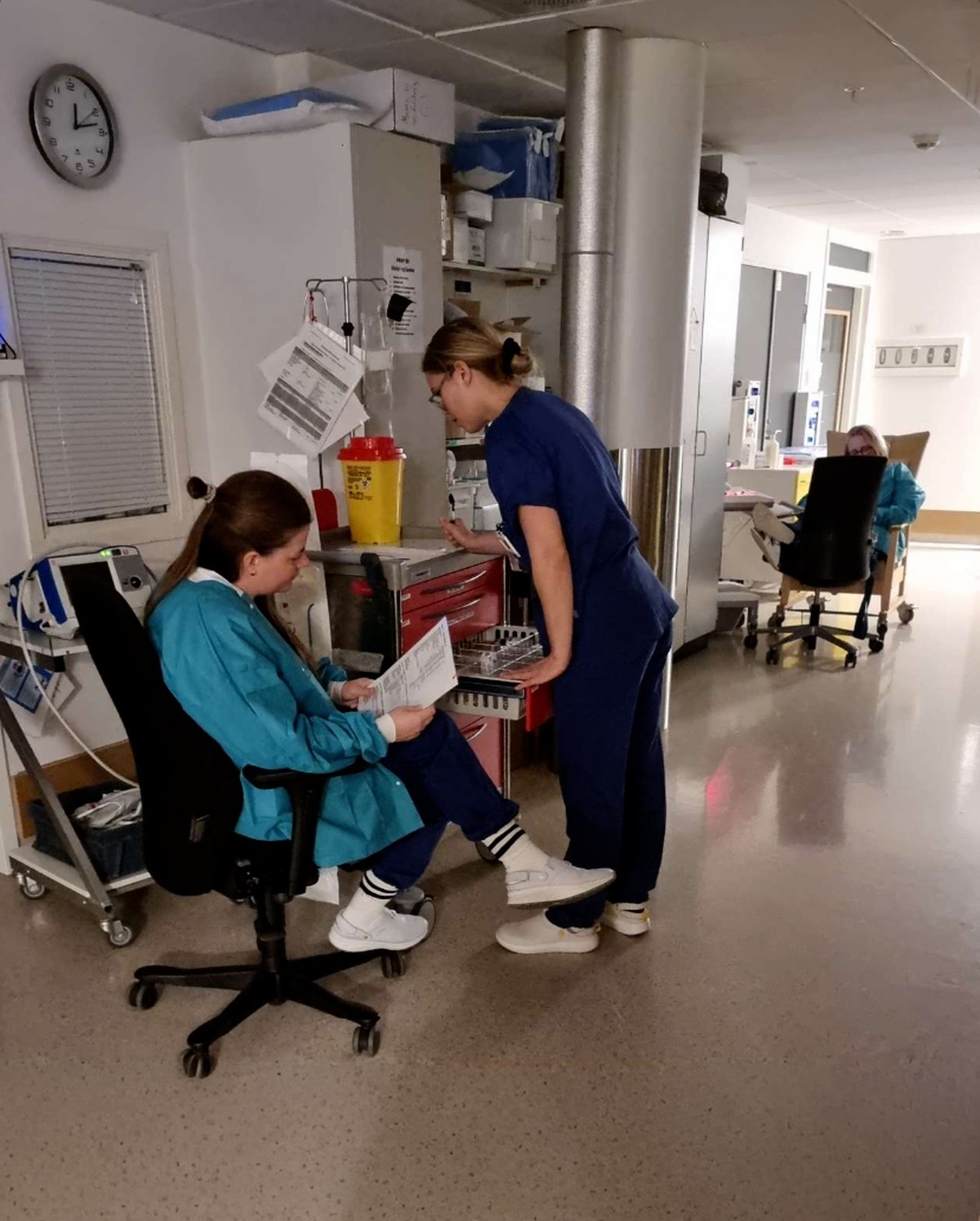
Working night shifts gave Hanna longer periods off between shift, and more uninterrupted time to focus on her studies. Photo: Private
Balancing Night Shifts and Studies
For Hanna, the flexibility of online learning was more than just convenient, it was what made her career change possible in the first place.
- Studying online allowed me to stay in Trondheim while continuing to work as a nurse. I switched to night shifts because they gave me longer periods off and more dedicated time for coursework and assignments.
It was demanding, but she has no doubt it was the right decision.
- It was a great way to build new skills without having to start over completely. I didn’t have to give up everything I had already built, I could add something new on top of it.
Then ChatGPT Arrived
Less than a month after she started her studies in autumn 2022, generative AI became widely available—and the questions quickly followed.
- When I applied to study Graphic Design, the job market looked very different from what it looked like by the time I graduated. I chose the programme expecting demand for design skills to continue growing in an increasingly digital world. But I had barely begun before the conversation shifted from ‘we need more people with digital skills’ to ‘what happens when more and more digital tasks can be automated?
The concern was real, and it stayed with her throughout her studies. But it also led to an important realisation.
- The experience made it clear to me how important interdisciplinary thinking can be. Graphic design doesn’t have to mean freelance work or a job at an advertising agency. Design skills can be combined with expertise from other fields, and that may be exactly where the biggest opportunities lie in the future.
More Than Logos and Posters
Many students begin a Graphic Design programme with one idea of what the field involves and finish with a completely different perspective. Hanna was no exception.
- Before you start, you might think graphic design is mainly about creating logos, posters, and websites. Of course, those things are part of the discipline, but it can be so much more than that. It’s about structuring information, making complex topics easier to understand, visualising processes, and helping people grasp things more quickly and effectively.
During her studies, she worked with typography, layout, branding, illustration, animation, photography, and web design. She also learned industry-standard tools such as Illustrator, InDesign, Photoshop, After Effects, and Figma.
- In my current role, I’ve ended up using almost every subject and software programme I learned during my studies. That says a lot about how broad and versatile the programme really is.
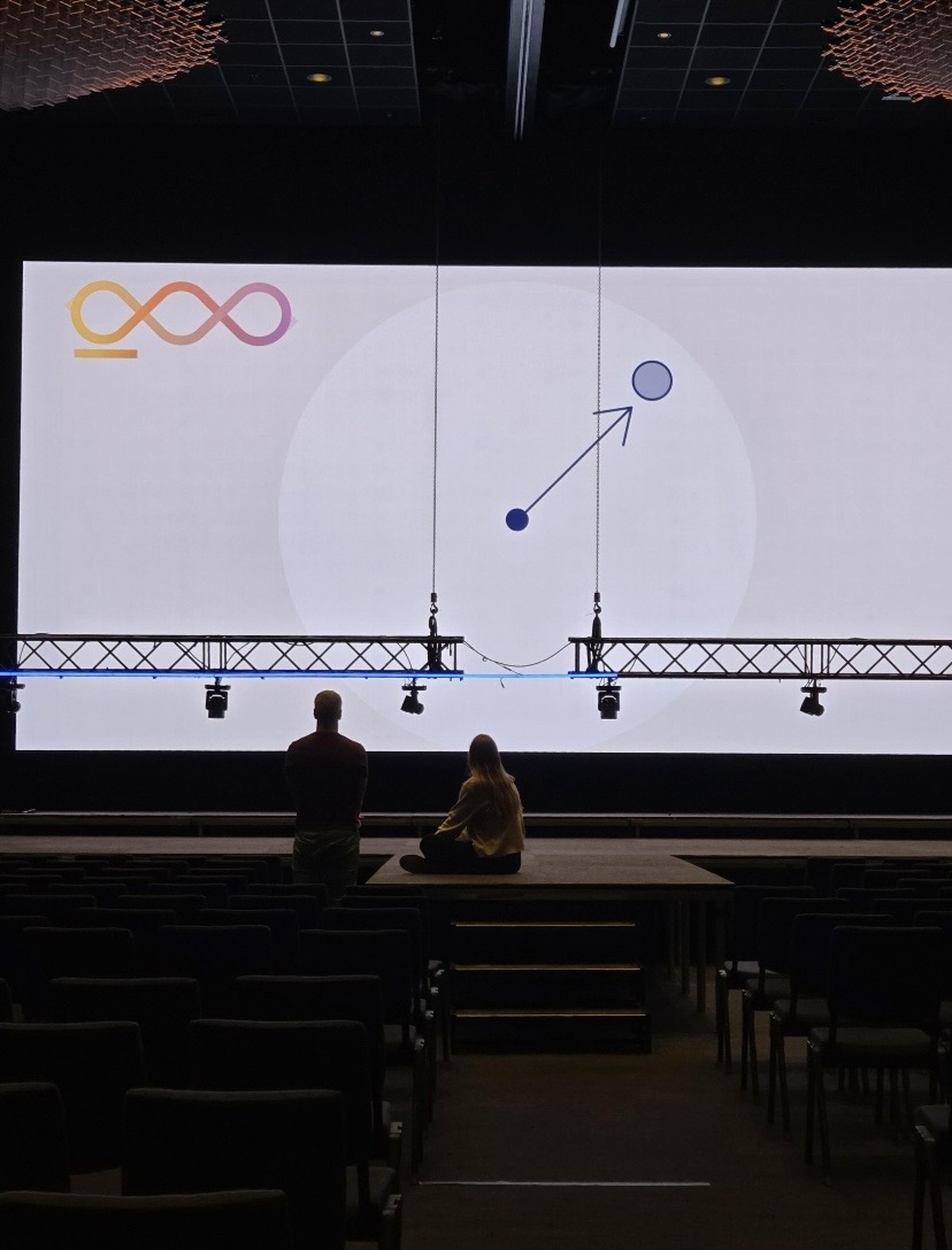
The evening before the St. Olav Conference, Hanna tests her animation film on the venue’s big screen ahead of an audience of 800 participants the following day. Photo: Private
A Trial by Fire in Front of 800 People
During her final semester, Hanna secured an internship at the Centre for Service Innovation at St. Olavs Hospital—a department she had never even heard of, despite having worked at the hospital for several years.
- It turned out to be a major turning point for me. One of the first significant projects I was given was creating a multi-minute animation film that would be shown at the St. Olav Conference in front of around 800 attendees. Up until then, the longest animation I had created during my studies was ten seconds, so it was both a steep learning curve and a real trial by fire.
The internship quickly became much more than a programme requirement.
- I enjoyed the work environment so much that by my second day, I was already dreading the day the internship would end. Fortunately, I was able to continue working there after the placement finished—this time as a paid employee.
Where Design Meets Healthcare
Today, no two days look the same for Hanna. She visualises workflows and patient journeys, creates presentations, illustrations, and animation films, designs prototypes in Figma, and works with web content and editing. She also contributes to innovation projects and workshops alongside clinicians, project managers, and service designers.
- I’ve even found a use for my photography coursework by taking professional headshots of staff members in the department, she says with a smile.
It is precisely the combination of her different areas of expertise that has become Hanna’s greatest strength, and the answer to the question she asked herself when AI began changing the rules.
I was a newly qualified designer, but I wasn’t new to healthcare. Hanna Skjetne Berg
- The job market began changing very quickly. The question became: what happens when more and more digital tasks can be automated? For me, the answer was interdisciplinary thinking. I was a newly qualified designer, but I wasn’t new to healthcare. That allowed me to bring design expertise into a context I already understood well, and I believe that’s something that’s difficult to replace with AI alone.
Advice for Anyone Considering Online Studies
For those considering an online programme but wondering whether it can realistically be combined with work and everyday life, Hanna has a clear message.
- Online studies exist for people who already have a life they don’t want to put on hold. It’s not about starting over, it’s about building on what you already have.
At the same time, she is honest about the commitment it requires.
- Be prepared to work hard and to be a beginner many times over. But if you stay curious and put in the effort, you can open doors you may not even know exist. For me, this programme has led to a career where I get to combine creativity, healthcare expertise, and problem-solving every single day. I’m incredibly grateful for that.
Related Studies

Two-year programme
Graphic Design
The programme offers hands-on training that develops both creative and strategic visual communication skills. Through real-world projects, you'll gain practical experience that equips you for immediate entry into the workplace.
Online
Oslo
Read more