



Beate Nilsen once thought she had to choose between law and technology. Studying Digital Forensics and Incident Response at Noroff showed her how the two could come together and open new career opportunities.
Beate Nilsen's journey to a bachelor degree in Digital Forensics and Incident Response hasn't exactly followed a straight path. But perhaps it hasn't been quite as random as she once thought.
Her interest in technology began at an early age. Growing up with computers, she spent plenty of time playing video games and became curious whenever something stopped working. Viruses and broken computers were problems waiting to be solved.
As she grew older, life took her in a different direction. She studied Law and Business at Riga Graduate School of Law, while technology gradually faded into the background.
When she later moved to Norway, that old interest slowly began to resurface.
It started with web development, almost entirely by accident.
– A friend asked me if I could make a website. I couldn't. But apparently instead of saying that, I thought, well… I can learn.
And so she did.
Finding the Combination She Had Been Looking For
When Beate discovered the bachelor's degree in Digital Forensics at Noroff, her interest was immediate.
– I remember reading about the programme and getting excited almost immediately. It was like, wait, this exists?
Here, several of her interests came together. Technology, security, investigations, and digital evidence were all central to the field, while there was also a clear connection to her background in law.
That connection mattered. After moving to Norway, she had struggled to see how she could build on her law degree, partly because continuing in that field required a level of Norwegian she hadn't yet reached.
Digital Forensics and Incident Response at Noroff University College offered another possibility.
– I didn't have to completely throw away one part of myself to pursue another one. Looking back, I thought I was changing direction, but I think I was really just coming back to something that had always been there.
Detective Work Through Digital Evidence
Throughout her studies, Beate became particularly fascinated by the investigative side of digital forensics.
She highlights courses covering networks, digital investigations, and advanced device forensics as especially interesting. The field isn't simply about understanding technology, but about uncovering what actually happened.
– I would probably explain it as detective work — a bit like Sherlock Holmes — just with computers and phones instead of fingerprints and crime scenes.
A single device can contain enormous amounts of information: files, messages, location data, timestamps, databases, and deleted content. The challenge is identifying what matters and understanding how the different pieces of evidence fit together.
– You can find something tiny that looks completely unimportant on its own, and then another piece of information suddenly gives it context and you're like, ahhh, OK… now this makes sense.
One project that particularly stands out involved investigating the Android version of the Uber app. Using virtual Android devices, she examined the digital traces the application left behind, including databases, user information, searches, and location data.
The project didn't go quite as expected, which turned out to be one of its most valuable lessons.
– I had to stop thinking about what should have happened and actually investigate what did happen. Real investigations aren't going to politely give you the evidence you expected to find.
Balancing Studies, Work, Family, and Laundry
Beate completed her bachelor's degree online while living in Bergen. At the same time, she was balancing work, children, and the demands of everyday life.
When asked what her daily life as an online student looked like, her answer is immediate:
– Chaotic.
Studying had to fit around everything else. Sometimes she worked on assignments during the day, sometimes in the evening, and sometimes after the rest of the family had gone to bed.
– During lecture breaks, I'd run down to the laundry room, take the washing out, put it in the dryer and run back upstairs. It was constant time management — always thinking about what needed to be done first.
The flexibility of online studies was therefore essential. Beate had already established her life in Bergen and couldn't simply move somewhere else to study.
She also found that Digital Forensics worked particularly well as an online programme. Much of the practical work was already computer-based, involving forensic software, virtual environments, databases, and networks.
She especially appreciated the hands-on assignments.
– I'm much better when I can actually do something with what I'm learning. Give me a problem and tell me to figure it out and I'm much happier.
Combining education, work, and family life also taught her something about expectations — and accepting that not everything has to be perfect all the time.
– Everything new is hard at first, so you have to choose your hard. Studying with children and work is hard. But staying stuck because you're scared of doing something difficult is also hard. So… choose your hard.
Where Law and Technology Came Together
Towards the end of her studies, Beate had the opportunity to participate in a project between Noroff and Swipload AS. The project focused on NIS2 compliance and how the requirements of the European cybersecurity framework could be applied to a Transport Management System provider.
Her responsibilities included regulatory analysis, risk and vulnerability assessments, reviewing policies, and preparing governance and security documentation.
Suddenly, her previous education became relevant again.
– I'd spent quite a long time thinking of Law and Business and Digital Forensics as two separate educations. Then, with this project, I was using both. That was probably one of the first times I thought, oh, maybe my slightly random educational history isn't actually that random.
The experience also sparked her interest in compliance — ensuring that organisations meet relevant laws, regulations, and requirements.
It is precisely the space between the technical and legal sides of an organisation that she finds most interesting.
–With compliance, reading the regulation is only the beginning. Someone then has to work out what it actually means for the company. What risks do we have? What controls are already there? What's missing? Do the policies actually reflect reality?
For Beate, this led to an important realisation.
– I started thinking that maybe I don't actually need to choose between law and technology. There are careers where that combination is the whole point.
Bringing Everything Together
Today, her working life is just as varied as her educational background.
She works as a painter while also taking on web development and IT consulting projects. Her responsibilities also include ISO implementation, documentation, and improving organisational systems and processes.
At first glance, these fields may seem worlds apart. But Beate sees a common thread running through them.
– I like creating things and I like solving problems. So maybe the common theme is just me looking at things and thinking, OK… how do I fix this?
Her next step is an MSc in Economic Crime at the University of Portsmouth, where she plans to explore areas such as financial crime, fraud, money laundering, compliance, and investigations.
For her, this doesn't feel like another change of direction.
– I already have Law and Business. Digital Forensics gave me the technical and investigative side. Through the NIS2 project I became more interested in cybersecurity, risk and compliance. So to me it doesn't feel like another change of direction. It feels more like I'm finally bringing all these different directions together.
Studying at Noroff has also changed how she sees her future career. Previously, she believed she would eventually have to choose between law and IT. Now, she is particularly interested in the areas where these disciplines overlap, including compliance, economic crime, digital risk, and investigations.
She doesn't have a perfectly mapped-out ten-year plan, though.
Perhaps that's fitting for someone who has discovered several of her greatest interests simply by being curious enough to try something new.
Her latest challenge is learning to play the cello, after one of her children started taking lessons.
– I'm currently much better at Digital Forensics than cello, let's put it that way.
Related studies

Bachelor
Digital Forensics and Incident Response
The rise in cyber attacks, ransomware and hacking has created a critical need for skilled digital investigators with the ability to respond to cyber security incidents.
Online
Read more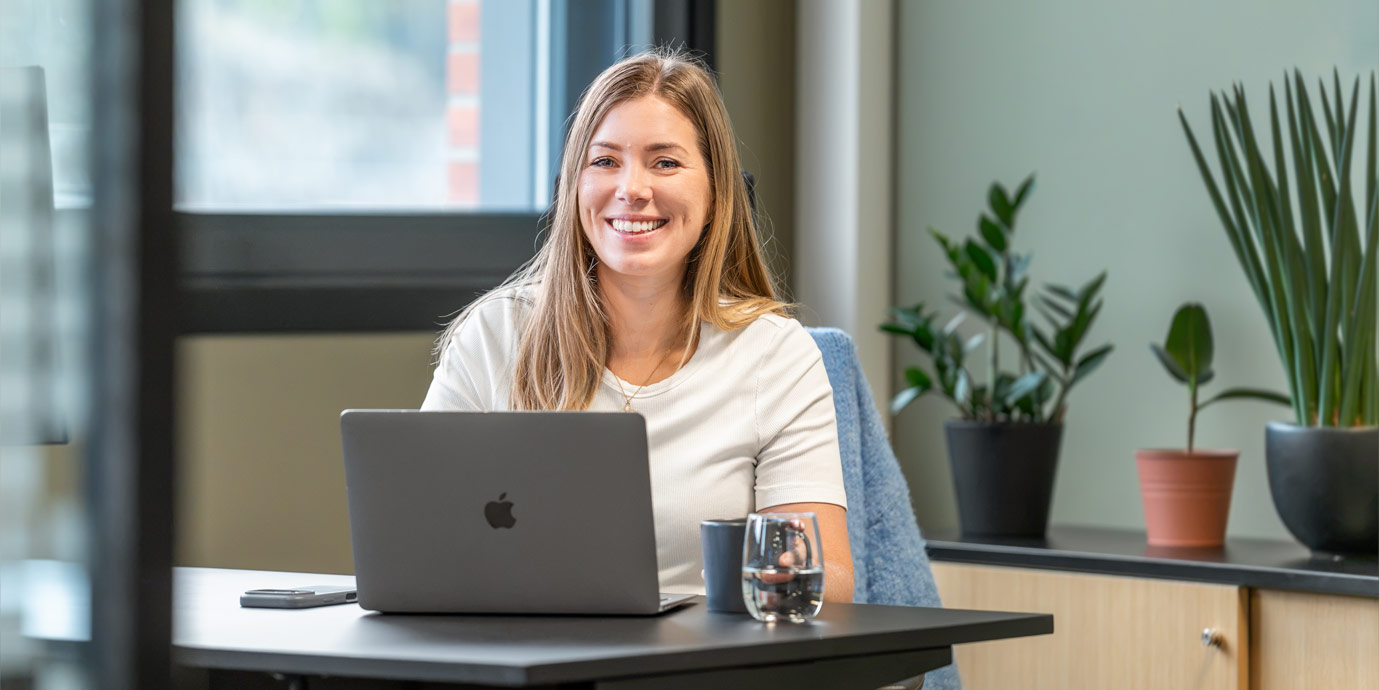
Bachelor
Cyber Security
The programme provides comprehensive training in securing digital systems against online attacks, cybercrime and digital warfare. It equips students for careers focused on strengthening digital defences and protecting data and information.
Online
Read more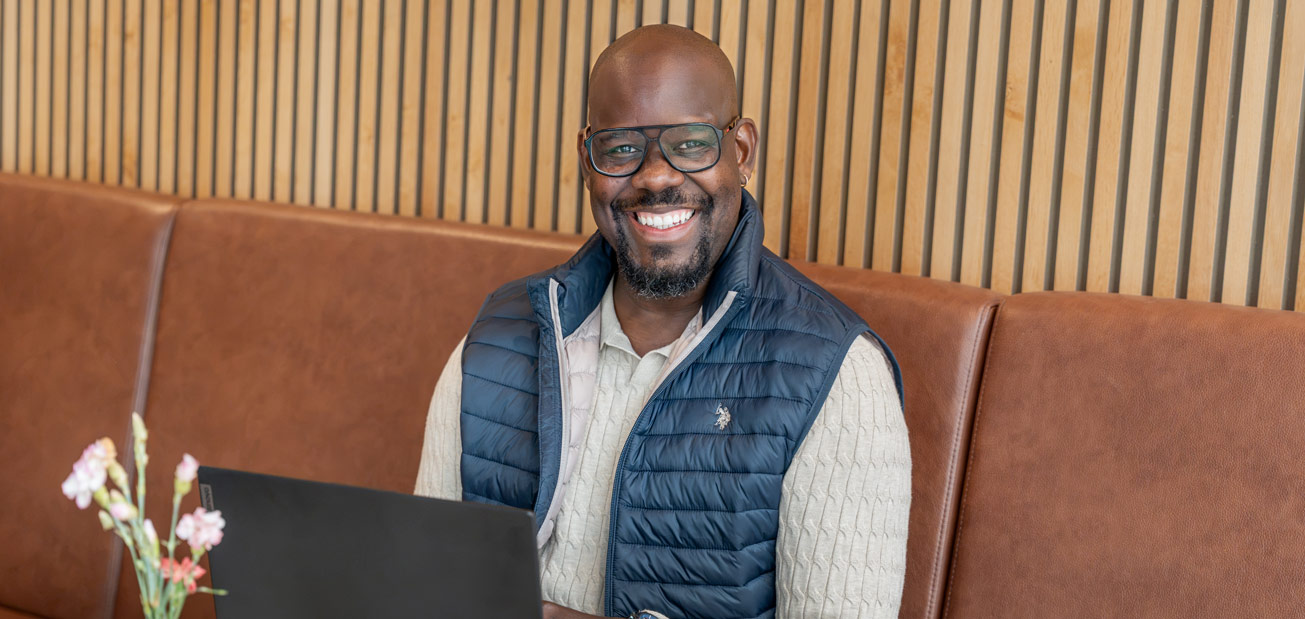
Bachelor
Applied Data Science
The programme equips you for a dynamic career, fostering collaboration with businesses to understand and harness the vast amounts of data at their disposal. It also cultivates skills in the field of intelligent AI systems.
Online
Read more