Select your language
Select your language


This programme builds essential game development skills, providing a solid foundation in both the creative and technical aspects of the field. Through dedicated specialisms, Game Systems Design and Environment Art for Games, you will build a portfolio showcasing your design thinking and practical expertise, fully preparing you for specialist roles in a rapidly evolving industry.
|
|
Online Studies |
|
9 August 2027 |
|
|
3 years full time |
|
|
NOK 50.000,- per semester |
|
|
Eligible for Norwegian student funding (Lånekassen) |
Within game development, artificial intelligence is primarily used as a functional tool for initial prototyping, routine task support, and reading or writing accessibility. Through various courses, you will explore both the application and creation of AI mechanics, from simple decision trees to complex behaviour systems, to understand interactive contexts. However, these systems do not replace core creative skills; there remains a critical space for manual work, foundational design thinking, and direct artistic execution.
Generative AI, particularly Large Language Models and diffusion models, has had a significant impact on the games industry. AI assistance in coding and aesthetics lowers the barrier to entry for prototyping games, revitalising projects that might not have started otherwise. The use of AI to clean up animations and create usable 3D models for games and animation are key developments within the industry. AI is already extensively used to reduce render times and create crisper images, freeing up time for creators. However, there remains an essential place for manual work, particularly within art and foundational design thinking, where human intent and craftsmanship drive true innovation.
Environment Art for Games
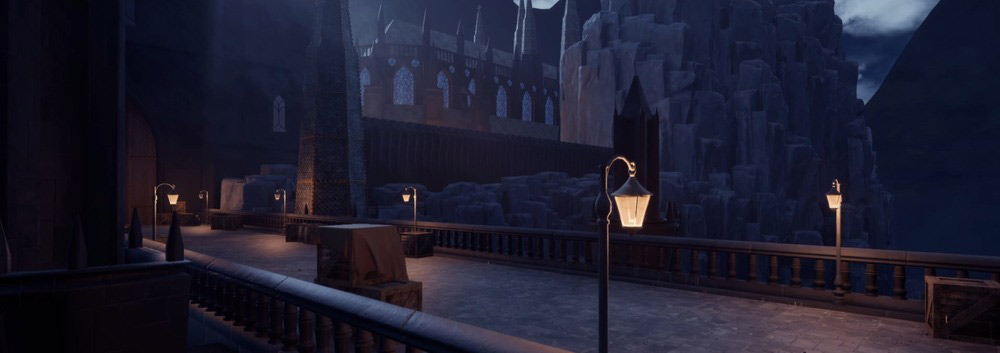
Visual storytelling and spatial immersion are central to modern game production. This pathway trains you to build the physical worlds players explore, turning initial concepts into finished, production-ready 3D environments. You will combine artistic craft with engine tools to sculpt landscapes, model assets, and use lighting and texture to bring atmospheric game spaces to life.
Game Systems Design
As games become more complex, the industry is increasingly relying on designers who understand interactive logic. This pathway focuses on the mechanics that govern play: crafting rules, balancing systems, and writing code for custom features. You will translate creative ideas into playable, interactive prototypes, mastering the tools needed to design deep, responsive player experiences.
The Game Development programme prepares you for immediate entry into the gaming industry, with a strong portfolio to boost your job prospects upon graduation.
The first year is common to all students. After that, you choose the pathway that suits you best. Once you have started your second year, there is still a small window in which to switch.
With a bachelor's degree in Game Development, you can pursue roles such as:
Environment Art for Games
Game Systems Design

In the first year you will explore the theoretical foundations of visual culture, learning game mechanics, interaction design and communication skills. You will also receive a thorough introduction to the software used in the programme as well as a grounding in ludology and academic study.
Environment Art for Games: The second year focuses on your specialism: designing and creating immersive worlds using a range of creation techniques and developing advanced, game-ready assets. The year also includes exploration of level design, procedural generation, and research methods.
Game Systems Design: The second year focuses on your specialism: designing, prototyping, and testing gameplay systems, developing core mechanics, and exploring how players interact with rules and structure. The year also includes study of coding architecture, procedural content, and research methods.
In your final year, you will respond to a live client brief, carry out a research project, and apply the skills you have developed over the course to complete your final bachelor project.
Read more about the study programme in our course catalogue.
Environment Art for Games
Year 1: 60 ECTS
Year 2: 60 ECTS
Year 3: 60 ECTS
Game Systems Design
Year 1: 60 ECTS
Year 2: 60 ECTS
Year 3: 60 ECTS
| School: | Noroff University College |
| Application deadline: | Continuous admission. Applications are processed in the order they are submitted. |
| Language of instruction: | English |
| Accreditations: | Approved for loans and grants from the Norwegian State Educational Loan Fund (Lånekassen). Accredited by NOKUT . |
| Degree: | Bachelor |
| Credits: | 180 ECTS |
The student will use software like Maya, Zbrush, Substance (Painter, Designer), and Photoshop. You can read more about software and hardware here.
Noroff has ongoing admissions, and applications are processed in the order they are received. The earlier you apply, the earlier you can secure a study place.
To qualify for the programme, you must have general study competence. It is also possible to apply based on recognised prior learning.
For international students, depending upon which country you have received your education from, the requirements will differ. Please use this website where you can find the specific requirements for your country at the bottom of the page.
All our study programs are approved for loans and grants from the Norwegian State Educational Loan Fund (Lånekassen). You can apply to the Loan Fund for basic support (loan and grant; NOK 170,368) and tuition fees (NOK 81,102).
As an adult student, you can receive loans and grants from the State Educational Loan Fund. This also applies if you work while studying.
As a main rule, you must be a Norwegian citizen to receive support from the Norwegian State Educational Fund. However, foreign citizens may also be entitled to financial support. Check here to see if you are eligible.