



Grethel is studying for a bachelor’s degree in Applied Data Science at Noroff University College. Her research project on artificial intelligence and MRI analysis has now been accepted to the PETRA 2026 conference in Greece, an international conference focused on technology that can improve quality of life and assistive solutions.
From Healthcare to Artificial Intelligence
For Grethel Mabilangan, the interest in data science began long before she formally started studying the field.
With a background in healthcare, HR, and business, she had already spent years working with analysis, information structuring, and decision support — without necessarily thinking of it as data science. Over time, she realized that data had become the very lifeblood of many work processes, from documentation and reporting to improvement initiatives and decision-making.
– I gradually realized that I had already been using principles from data science long before I started studying it formally, she says.
When choosing her next step in education, she decided to pursue a bachelor’s degree in Applied Data Science at Noroff University College.
– I wanted a program that wasn’t just about theory, but also provided practical experience with programming, analytics, machine learning, and AI. The flexibility of the online program was also very important to me, she says.
Researching AI and MRI Images
Through her studies, Grethel has developed a strong interest in how artificial intelligence can be used to solve complex and socially meaningful challenges.
The combination of technology, analytics, and human needs is what motivates her the most.
– Data science is not just about numbers and programming. It’s about building a mental model of the problem, asking the right questions, and using data to create insights that can actually provide value for people and organizations, she says.
This interest eventually led her to the research project LumbarAI — a project investigating how artificial intelligence can be used to classify degenerative spinal conditions from MRI images.
In the project, Grethel worked with medical image analysis and deep learning, focusing on lumbar spinal canal stenosis — a condition involving narrowing of the spinal canal in the lower back.
The project also became personal for Grethel.
– I have personally experienced back pain, and that made me more interested in understanding how spinal conditions are evaluated and how MRI images can provide better insights, she explains.
She wanted not only to develop a technical AI model, but also to better understand how artificial intelligence can be used responsibly and explainably within healthcare.
– For me, the project was not only about achieving high accuracy, but also about asking questions such as: Is the model learning from the correct area of the image? Is the data good enough? Can the results be explained? she says.
At the same time, she emphasizes that the goal is not to replace clinicians, but to explore how AI can contribute as a decision-support tool.

📸 Grethel Mabilangan.
Putting Data at the Center
The project is based on a so-called data-centric approach to AI.
– Instead of only focusing on building a more advanced model, we wanted to investigate how better data quality, preprocessing, and structuring could produce more reliable results, she explains.
As part of LumbarAI, the team compared full MRI images with more targeted image crops around the spinal canal to investigate whether the model became more reliable when focusing on the most clinically relevant area.
– It was important for us that the model did not only provide a prediction, but that we could also understand why, she says.
The work on LumbarAI was demanding at times. Grethel describes long days filled with testing, debugging, and experimentation.
– Many times, I sat in front of the computer almost the entire day trying to figure out why something failed. I had to go back, recheck the data, rerun experiments, and document what was actually happening, she says.
She believes one of the most important lessons she learned was that AI research is about far more than simply building a model.
– You need to be patient, curious, and critical. For me, data-centric thinking also works as an academic and ethical compass. It reminds us that we should not only chase high accuracy or more complex models, but also question data quality, explainability, transparency, and trust, she says.
Accepted to an International Conference
The research project has now been accepted to the PETRA 2026 conference in Greece — an international conference focused on technologies and solutions that can improve quality of life.
For Grethel, presenting her work on an international stage means a great deal.
– It feels like a confirmation that our work has value beyond a regular student assignment, and that the research can contribute to a larger conversation about AI, health technology, and decision support, she says.
She also highlights the support from supervisors and lecturers at Noroff as an important part of the process.
– The guidance helped me develop the project from a technical idea into a more structured research project. I learned to think more critically about methodology, evaluation, and limitations, she explains.
A Practical and Demanding Student Experience
Grethel describes her experience in the Applied Data Science bachelor’s program as both challenging and highly rewarding.
Students work with programming, statistics, machine learning, visualization, and project work while also building a strong theoretical foundation in mathematics and algorithmic thinking.
– Our Applied Data Science degree programme at Noroff University College empowers tomorrow’s innovators. We equip students with strong technical skills, a research-driven mindset, and the confidence to solve real-world problems, says Isah Lawal, Study Programme Lead for the Bachelor Applied Data Science.
– The program doesn’t just teach us how to use the tools, but also why the methods work and how the results should be interpreted, Grethel says.
She especially values the combination of theory and practice.
– You learn to understand the entire process: from data processing and analysis to model development, evaluation, and communicating results, she explains.
Lawal believes Grethel’s success reflects what the programme aims to achieve.
– Grethel’s published work at an AI conference proves that ADS students don’t just learn; they lead, create, and make a difference, professor Lawal says.
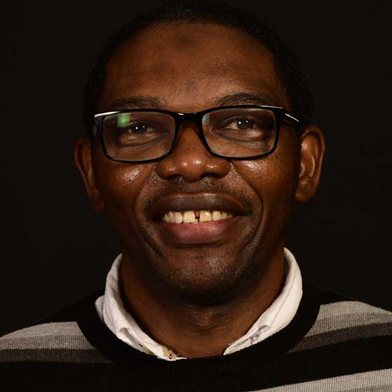
📸 Professor Isah Lawal.
Motivated by Technology with Social Impact
Looking ahead, Grethel wants to continue working with artificial intelligence and data science in areas where technology can contribute to meaningful social impact.
She highlights healthcare, the maritime sector, HR, security, and risk assessment as industries where AI can play an important role.
– My dream is to work with technology that is not only impressive on paper, but that actually helps people, organizations, and society make better decisions, she says.
To others considering studying Applied Data Science at Noroff, she has one clear piece of advice:
– You don’t need to know everything from the beginning. The most important thing is to stay curious, be willing to learn, and dare to ask questions. Data science is not just about code and models, but about understanding the world better and using technology to make a difference.
In closing, she adds:
– Once you start understanding how data, analytics, AI, and decision-making connect, it almost feels like “the sky is the limit.”
Bachelor’s Degree in Applied Data Science
This programme prepares you for an exciting career where you will help organizations understand and utilize the massive amounts of data available to them. You will also develop skills in intelligent AI systems.
After completing the Applied Data Science programme, you may work as:
- AI Specialist
- Data Analyst
- Data Scientist
- Machine Learning Engineer
- Business Intelligence Analyst
- Research Scientist
- Software Developer

Related Studies

Bachelor
Applied Data Science
The programme equips you for a dynamic career, fostering collaboration with businesses to understand and harness the vast amounts of data at their disposal. It also cultivates skills in the field of intelligent AI systems.
Online
Online+ Oslo/Bergen
Read more
Bachelor
Digital Assurance and Security Management
Get involved in management of security and protection of valuable digital assets. This Bachelor's degree covers IT skills ranging from business processes to database systems, management and IT architecture.
Online
Online+ Oslo/Bergen
Read more
Bachelor
Cyber Security
The programme provides comprehensive training in securing digital systems against online attacks, cybercrime and digital warfare. It equips students for careers focused on strengthening digital defences and protecting data and information.
Online
Online+ Oslo/Bergen
Read more