


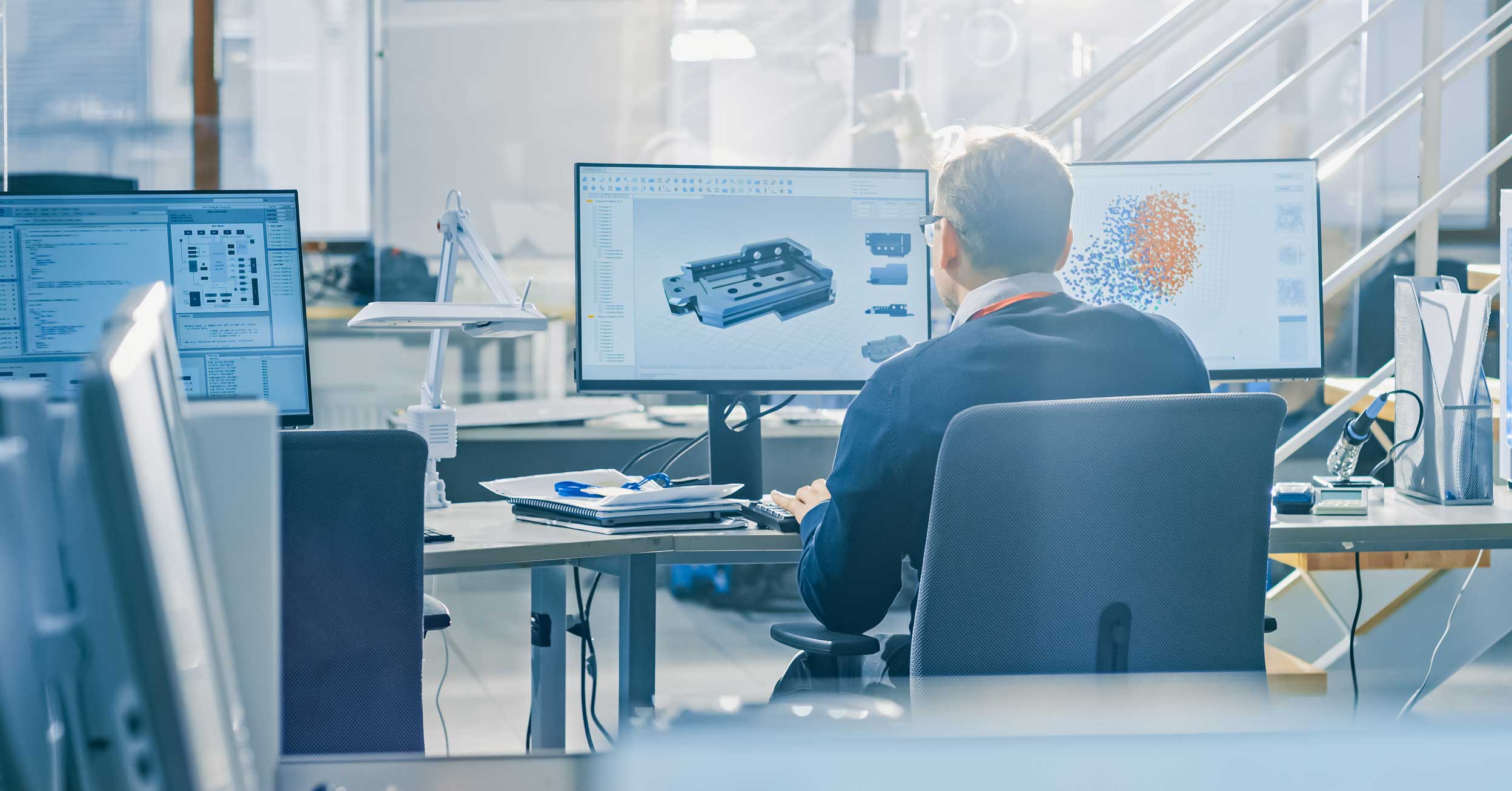
Behind every product we use lies a process of design, precision and problem-solving. Technical design and CAD are at the core of modern manufacturing — and the demand for these skills is growing rapidly.
From everyday consumer products to advanced industrial components, everything starts with an idea. But turning that idea into something that can actually be produced requires technical expertise, digital tools and a deep understanding of how design and manufacturing work together.
As industries become more digital and production more complex, the role of technical designers is becoming increasingly important.
From idea to production
Modern manufacturing depends on the ability to transform concepts into precise, functional designs. This process requires more than creativity — it requires structure, accuracy and the ability to think ahead.
Technical designers play a key role in this process. They create detailed drawings and 3D models that make it possible to test, refine and prepare products for manufacturing before anything is physically produced.
This not only improves quality, but also reduces costs and shortens development time. In many industries, this digital-first approach has become the standard.
The role of CAD in modern industry
Computer-aided design (CAD) has fundamentally changed how products are developed. Instead of relying on physical prototypes, designers can now build detailed digital models and simulate how products will perform in real-world conditions.
This allows companies to identify potential issues early, optimize designs and ensure that products meet both technical requirements and production constraints. As a result, CAD has become an essential tool across industries such as manufacturing, engineering, construction and product development.
For professionals, this means that understanding CAD is no longer optional — it is a core skill for working with modern production.
A changing manufacturing landscape
The manufacturing industry is undergoing rapid transformation driven by automation, digital tools and smarter production systems. Technologies such as digital simulations and integrated design processes are changing how products are developed and produced.
This creates a growing need for people who understand both the technical and practical aspects of manufacturing. Companies are looking for professionals who can bridge the gap between design and production, ensuring that ideas can be turned into efficient, manufacturable solutions.
Learn technical design for real-world applications
The Technical Design – Manufacturing program at Noroff is designed to meet these industry needs. Students gain hands-on experience with CAD tools, technical drawing and product development, while also developing an understanding of how manufacturing processes work in practice.
The program focuses on applied learning, where students work with realistic projects and challenges. This ensures they not only understand how to design products, but also how to prepare them for production in a real-world context.
A career with strong opportunities
As industries continue to evolve, the demand for technical design skills is increasing. Companies need professionals who can contribute from day one, with both technical knowledge and practical experience.
This opens up a range of career opportunities within design, engineering and manufacturing. Typical roles include:
- CAD designer
- Technical designer
- Product developer
- Manufacturing specialist
What these roles have in common is the need to combine creativity with precision and technical understanding.
Designing the future of manufacturing
Modern manufacturing depends on smart, efficient design. Without strong technical foundations, even the best ideas cannot be realised.
Technical designers play a crucial role in shaping the products we use every day, ensuring they are functional, efficient and ready for production. As technology continues to develop, this role will only become more important.