
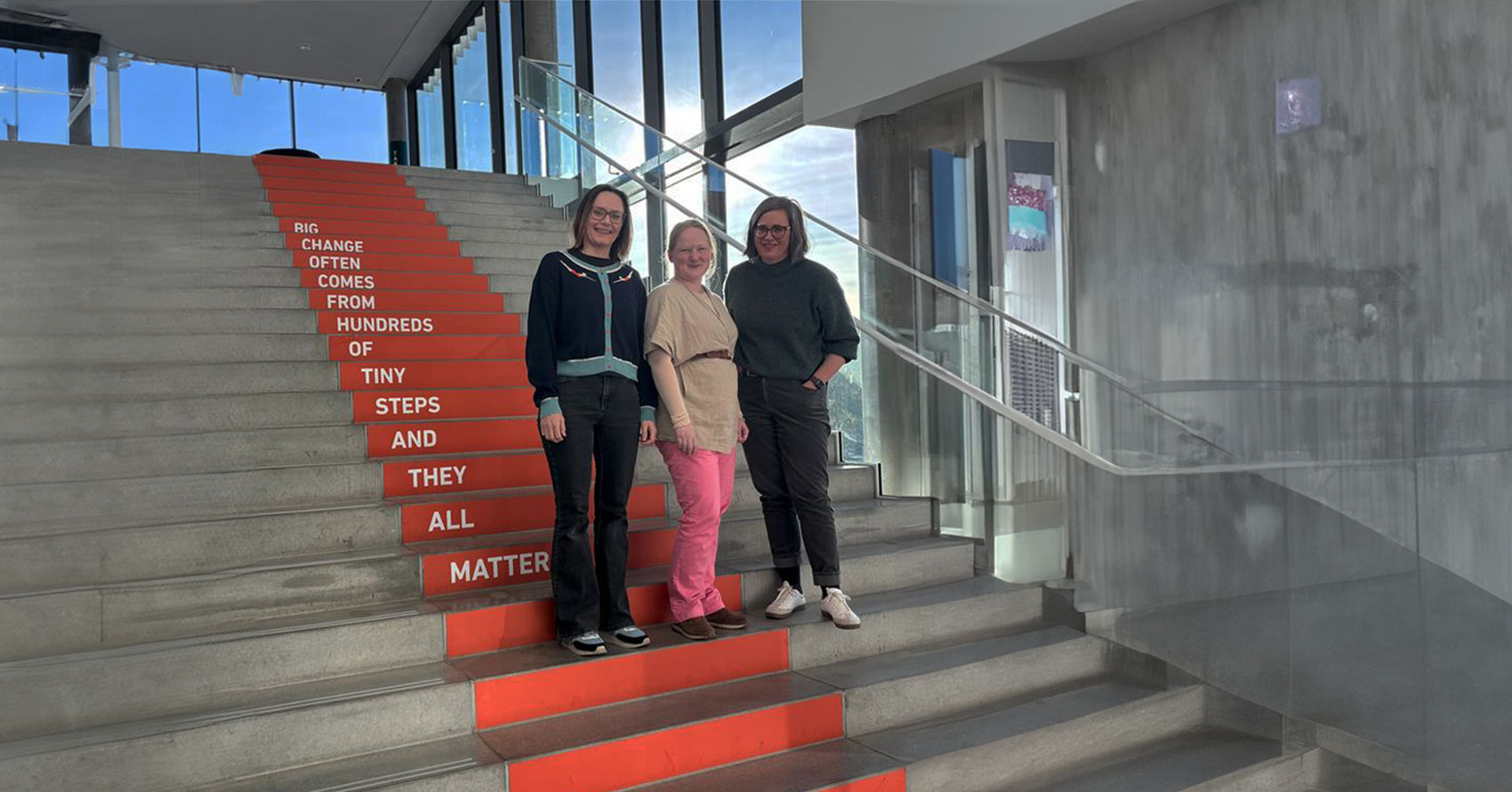
Four vocational college lecturers from Noroff have recently taken part in Erasmus+ mobility programmes in Denmark and Spain. The result? New partnerships and professional networks, innovative teaching methods, and concrete AI tools that enhance the quality of students’ learning journeys – both online and on campus.
Strong professional insights from Denmark strengthen the academic environment
Program Manager, Linki Brand and Lecturer Jannicke Velsvik from the Graphic Design programme spent four days with the Multimedia Design programme at the International Business Academy (IBA) in Kolding, Denmark.
During the visit, they gained insight into everything from industry collaboration to learning design for hybrid education, and experienced how IBA works closely and openly across academic disciplines.
- The visit gave us a fresh perspective on how design education is delivered internationally. It was incredibly inspiring to see how IBA collaborates internally and with industry, and how knowledge is shared across teams, says Linki Brand.
The visit also reinforced Noroff’s ambition to further integrate campus-based and online education.
- We were given concrete examples of how hybrid learning pathways can work seamlessly in practice. That experience will be directly applied to the further development of the Graphic Design programme, she explains.
AI and digital pedagogy in teaching
At the same time, Solveig Friberg, Program Manager for Technical Design, and Chantal Van Wyk, Lecturer in Network and IT Security, attended the ErasmusLearn course Digital and AI Tools for Innovative Teaching in Málaga.
The course provided new perspectives on how artificial intelligence is influencing teaching, learning activities, and assessment, particularly within technical and digital disciplines.
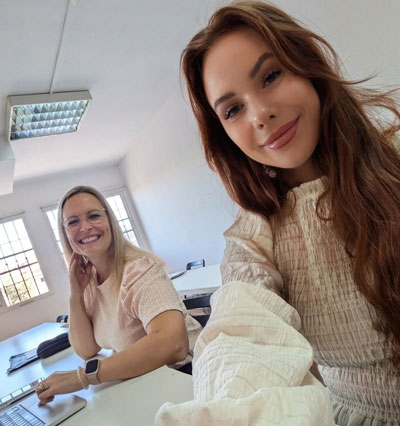
Chantal Van Wyk, Lecturer in Network and IT Security, and Solveig Friberg, Program Manager for Technical Design, during their Erasmus+ mobility in Málaga. Photo: Private
AI, assessment, and learning design in higher education
Solveig Friberg emphasises that AI itself is not the primary challenge, rather, it places new demands on how education is structured.
- AI isn’t necessarily the problem; our systems need to evolve. Cheating has always existed, but AI makes it more visible. The solution lies in strengthening the learning process and more clearly connecting education to working life.
A key topic during the course was how teaching and assessment can support the development of students’ critical thinking, creativity, and collaboration skills.
- Critical thinking, creativity, and collaboration must be intentionally designed. We worked with metacognitive questions, psychological safety, and exploratory learning methods to strengthen these skills.
Flexible assessment formats were also highlighted as an important approach to more inclusive learning.
- Not all students express themselves best through written text. Alternative assessment formats, such as video, can make assessment both more inclusive and more accurate.
Solveig also points to Cognitive Load Theory as particularly relevant within technical disciplines.
- By reducing unnecessary complexity, we can better support learning. These are perspectives I look forward to sharing with colleagues at Noroff.
AI tools and simulations create more practice-oriented learning
Chantal Van Wyk highlights how AI tools can be actively used to create more engaging and practice-oriented teaching.
- We learned how to use AI to create ‘mini-loops’, short, active learning sequences that reduce cognitive load and increase engagement. This represents a significant shift away from long, passive lectures.
Within IT and security programmes, AI-generated simulations are now being tested, allowing students to practise realistic scenarios that would otherwise be too costly, complex, or risky.
- Students can train in advanced, realistic environments – safely and at no cost. This makes learning both more relevant and more accessible, says Chantal.
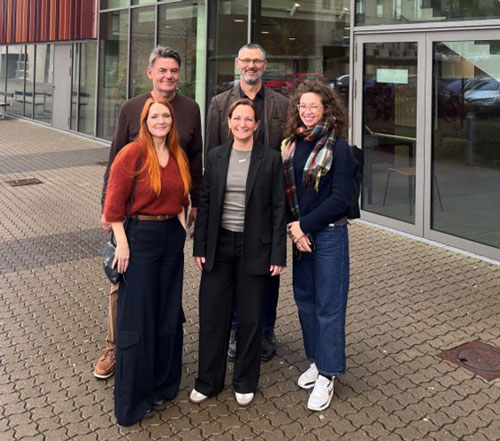
From left: Søren Bladt and Morten Kier (IBA, Kolding). Front row: Ann-Elin Bjørnsen, Heidi Møller Strand, and Siri Rutlin Harildstad. Photo: Private.
International collaboration strengthens educational quality
The Erasmus+ initiative is part of Noroff Vocational College’s strategy to develop expertise in digital pedagogy, learning technology, and international labour market relevance across its study programmes. Noroff received Erasmus accreditation earlier this year, enabling long-term and strategic work with international collaboration and staff mobility.
The Erasmus team consists of Head of Internationalisation Heidi Møller Strand, Head of Competence Development Siri Rutlin Harildstad, and Senior Advisor Ann-Elin Bjørnsen. The team continues to develop new partnerships with educational institutions across Europe, and several staff members will participate in new mobility programmes as early as next semester.
- Erasmus+ gives us access to knowledge, expertise, networks, and experiences we would otherwise not gain. These mobility programmes don’t just provide professional development for individual staff members – they elevate study programmes and ensure quality across the entire organisation, says the Erasmus team.

